OUR COMMITMENT IS TO BUILD GENUINE CONNECTIONS THROUGH HONEST COMMUNICATION AND ETHICAL PRACTICES


Unpacking Catalyst For Economic Transformation At The Africa Trade Summit 2026
Held in Accra, Ghana, the summit brought together political leaders, business executives, financial institutions, and development partners to focus on one central question: how can Africa trade more with itself, add more value to what it produces, and position itself competitively in a changing global economy? This article offers a simplified breakdown of the summit’s purpose, its connection to the African Continental Free Trade Area (AfCFTA), the stakeholders involved, the outcomes that emerged, and what it may signal for the future of African trade and investment.
3 min read
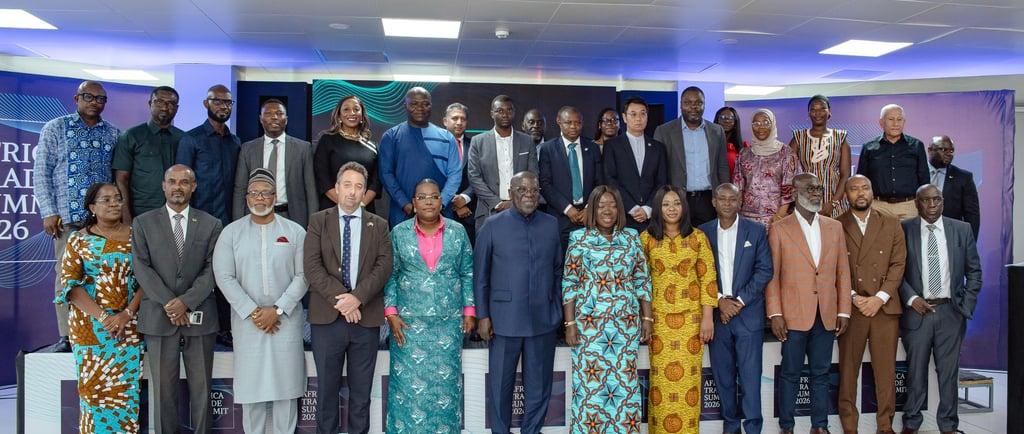
Overview of Africa Trade Summit 2026
The Africa Trade Summit was a monumental event; the conversations it sparked have been difficult to ignore. From government statements and post-summit reporting to expert commentary across the continent, it is clear that the event marked an important moment in Africa’s ongoing push toward deeper economic integration and self-driven growth.
The timing of the summit was significant. Africa is navigating a global environment marked by supply-chain disruptions, geopolitical tensions, and shifting trade alliances. Against this backdrop, the summit framed intra-African trade not as an optional goal but as an economic necessity.
Discussions reportedly focused on reducing Africa’s dependence on raw-material exports, strengthening regional manufacturing hubs, and building the infrastructure and policy alignment needed to make cross-border trade smoother. Even from a distance, one consistent message stands out: Africa’s economic future depends on collaboration rather than fragmentation
The African Continental Free Trade Area (AfCFTA) Explained
At the core of the Africa Trade Summit was the African Continental Free Trade Area (AfCFTA), an African Union initiative designed to advance economic integration across the continent. AfCFTA aims to create a single market for goods and services among African countries, with a focus on increasing intra-African trade. By reducing tariffs on most goods and addressing non-tariff barriers such as customs inefficiencies and regulatory differences, the agreement seeks to make trade within Africa more accessible and efficient for African producers. Beyond tariff reduction, AfCFTA also covers areas such as services trade, investment, and competition policy, supporting the development of regional value chains.
What makes AfCFTA particularly important is its long-term ambition. Beyond tariffs, it addresses services trade, investment, competition policy, digital trade, and intellectual property. If fully implemented, it could reshape how African businesses operate — encouraging regional value chains instead of export-oriented, extractive models. The summit reportedly reinforced the idea that AfCFTA’s success will not be measured by agreements signed, but by trucks crossing borders faster, factories sourcing inputs regionally, and small businesses reaching new markets.
Key Stakeholders at Trade Summit
The Africa Trade Summit 2026 gathered a diverse array of participants from various sectors, playing a pivotal role in engaging in constructive dialogue aimed at economic transformation. High-level attendees included heads of state, government ministers, prominent CEOs, and significant investors.
As host nation, Ghana’s senior government officials played a central role in anchoring the summit’s discussions. Figures such as;
The President of Ghana, representing national political leadership and commitment to continental trade integration
The Minister for Trade and Industry of Ghana is responsible for aligning national trade policy with AfCFTA objectives
At the continental level, AfCFTA-related summits are often associated with:
Wamkele Mene, Secretary-General of the AfCFTA Secretariat, who has been a leading voice on implementation, tariff schedules, and private-sector engagement
African Union Commissioners responsible for trade, industry, and economic development, who help coordinate policy across member states
Heads of state and government ministers represented a wide range of African nations, showcasing the continent's unified approach toward fostering sustainable economic growth. Their participation served not only as a testament to their commitment but also reflected regional economic priorities. The discussions led by these leaders highlighted the need for cohesive policies that facilitate trade, investment, and cross-border collaboration across the continent.
The private sector featured heavily, particularly large African and multinational firms involved in manufacturing, logistics, energy, and agribusiness. Their participation underscored a shared understanding that policy frameworks must align with business realities if trade growth is to be sustainable.
Outcomes for African Trade and Investment
Looking ahead, the outcomes of the Africa Trade Summit 2026 point to a clear emphasis on deepening regional value chains as a foundation for sustainable trade growth. Discussions highlighted priority sectors such as agriculture, pharmaceuticals, manufacturing, and logistics, where coordinated production across multiple countries can strengthen competitiveness and reduce reliance on external markets. By encouraging countries to participate in shared value chains rather than operate in isolation, the summit reinforced the importance of regional collaboration in boosting industrial capacity, creating jobs, and retaining economic value within the continent.
The summit also underscored several cross-cutting enablers necessary to support these ambitions. Digital trade integration emerged as a key priority, with technology viewed as essential for addressing long-standing challenges such as inefficient customs procedures and fragmented payment systems. At the same time, participants stressed the need for inclusive trade policies, particularly those that support women- and youth-led enterprises, to ensure that the benefits of AfCFTA-driven integration are broadly shared. Public–private partnerships were identified as a critical mechanism for mobilizing finance, especially for large-scale infrastructure and industrial projects, positioning collaboration between governments and the private sector as central to Africa’s trade and investment future.
In conclusion, the outcomes of the Africa Trade Summit 2026 reflect a growing recognition that Africa’s economic transformation will depend on how effectively it trades with itself, invests in its people, and aligns policy with production.
Whether the summit’s ambitions translate into measurable change will depend on what happens next — in ministries, boardrooms, factories, and border posts across the continent. For now, the summit stands as a reminder that Africa’s trade future is no longer a distant aspiration, but an active work in progress.